

Which Dog Probiotic Format Is Most Effective? Drops vs Chews vs Powders — 2026 PawBiotix Consumer Analysis
Pet Wellness Consumer Analysis (2026): Why Searches for "Best Probiotic for Dogs," "Most Effective Probiotic for Dogs," "Probiotic for Dogs with Allergies," and "Best Probiotic for Dogs with Yeast" Are Rising — and How Consumers Interpret These Terms
Largo, Florida, Jan. 22, 2026 (GLOBE NEWSWIRE) -- Disclaimer: This article is for informational purposes only. It is not veterinary advice. Always consult a qualified veterinarian before starting any new supplement for your pet. If you purchase through links in this article, a commission may be earned at no additional cost to you.
Early 2026 has seen heightened interest in canine digestive wellness, as pet owners research probiotic options during commonly observed post-holiday "reset" behavior. This consumer analysis examines PawBiotix, a liquid probiotic formula distributed from Largo, Florida, within the broader context of how dog owners evaluate probiotic formats and delivery methods. For additional background on this product, readers may also reference our previous PawBiotix consumer report.
Note on wording: This report uses phrases such as "best probiotic for dogs," "most effective probiotic for dogs," "probiotic for dogs with allergies," and "best probiotic for dogs with yeast" to reflect common search language. This report does not claim any product is best or most effective for all dogs and does not evaluate or predict veterinary outcomes. Dogs with health concerns should be evaluated by a qualified veterinarian.
What "Dog Probiotic" Means in 2026 (and What It Doesn't)
When pet owners search for "best probiotic for dogs" or "most effective probiotic for dogs" following a veterinarian's suggestion or after seeing social media content, they're typically asking three distinct questions: Is there legitimate research supporting probiotics for canine digestive health? How do I differentiate quality formulations from inferior products? Which specific product format fits my dog's individual needs?
Understanding what constitutes an appropriate probiotic choice requires establishing evaluation criteria rather than declaring winners. This analysis does not determine which product is objectively superior—individual pet needs, health circumstances, and administration preferences vary dramatically across households.
Results and Experience Disclaimer: Individual experiences with probiotic products vary significantly based on factors including consistency of use, overall diet, existing health conditions, individual physiology, and baseline digestive status. No specific results are guaranteed.
FTC Affiliate Disclosure: This article contains affiliate links. If you purchase through these links, a commission may be earned at no additional cost to you. This compensation does not influence the accuracy or integrity of the information presented.
View the current PawBiotix offer (official PawBiotix page)
Why "Best Probiotic for Dogs" Is a Common Search (and What People Usually Mean)
The phrase "best probiotic for dogs" often appears more prominently in early-year search behavior, as pet owners evaluate digestive support options as part of new-year wellness commitments. But what do consumers actually mean when they type this phrase?
Most pet owners searching for the best probiotic for dogs or most effective probiotic for dogs are looking for guidance on format selection, ingredient transparency, and administration ease—not a definitive ranking. They want to understand whether liquid drops, chewable tablets, or powder supplements will work best for their specific dog's temperament and their own daily routine.
The search pattern reflects a desire for education, not a sales pitch. Pet owners who land on content that feels overly promotional often bounce quickly because they recognize marketing when they see it. What converts is accurate information that helps them make their own informed decision.
Common related queries include "probiotic for dogs," "dog digestive supplement," "canine gut health," and "pet microbiome support"—all pointing toward the same underlying question: which delivery method fits my pet's existing routine and acceptance patterns?
Drops vs Chews vs Powders: How Delivery Format Changes Administration
Pet owners evaluating digestive support supplements encounter several distinct delivery methods, each with characteristics that may influence suitability for specific situations.
Liquid Drop Formats
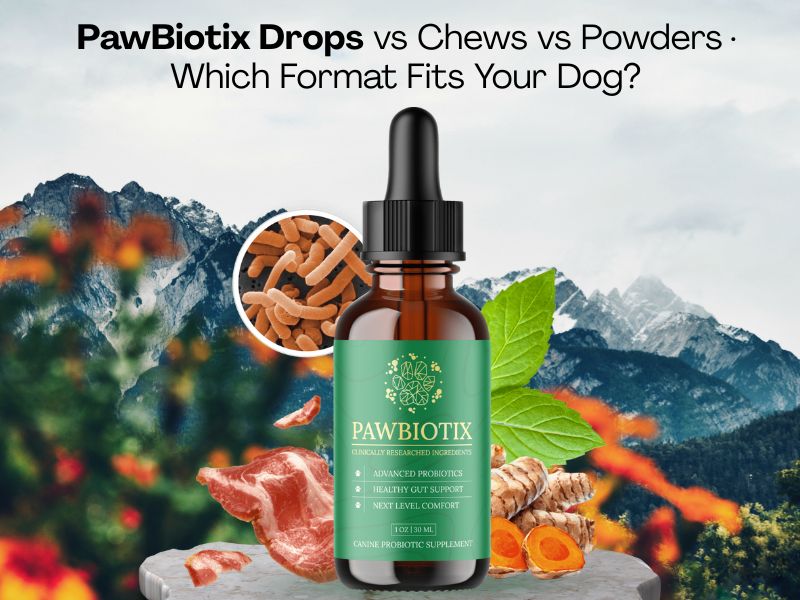
Liquid probiotics like PawBiotix utilize dropper-based administration. According to the brand, this format allows precise dosing based on dog weight and can be administered directly into the mouth or mixed with food. The liquid format may offer advantages for dogs who resist chewable supplements or have difficulty with larger tablets. However, liquid formats typically require refrigeration after opening to maintain probiotic viability.
Chewable Tablet Formats
Chewable probiotic supplements often incorporate flavoring agents to encourage voluntary consumption. This format may appeal to pet owners seeking minimal administration effort, as many dogs accept flavored chews as treats. Considerations include ingredient density per serving and the presence of additional binding agents required for tablet formation.
Powder Formats
Powder probiotics are designed for mixing with regular meals. This format offers flexibility in dosing and may be less noticeable to picky eaters when thoroughly incorporated into wet food. Storage requirements and mixing consistency represent primary considerations.
View the current PawBiotix offer (official PawBiotix page)
How Pet Owners Compare a "Probiotic for Dogs with Allergies"
When pet owners search for a "probiotic for dogs with allergies," they're often exploring whether digestive support might play a role in their dog's overall wellness picture. This search behavior reflects growing consumer interest in how digestive wellness may relate to broader canine health discussions.
Important clarity: While some pet owners research probiotics in connection with allergy-related concerns, probiotic supplements are intended for general digestive wellness support and are not treatments for allergic conditions. Dogs experiencing allergy symptoms—itching, skin irritation, ear problems, or digestive upset—should receive professional veterinary evaluation to identify underlying causes and appropriate interventions.
The phrase "probiotic for dogs with allergies" often indicates pet owners who have already consulted their veterinarian and received guidance to explore digestive support as part of a broader care approach. These consumers typically seek products with transparent ingredient lists, recognizable probiotic strains, and clear labeling about what the product does and does not claim to do.
What distinguishes informed searches for a probiotic for dogs with allergies from casual browsing is the level of research involved. These pet owners read labels carefully, compare CFU counts, and evaluate whether a product's formulation aligns with their veterinarian's recommendations.
Why "Best Probiotic for Dogs with Yeast" Is a Popular Search Phrase
The search phrase "best probiotic for dogs with yeast" appears frequently in consumer research behavior as pet owners explore the relationship between gut microbiome balance and overall canine health. Like allergy-related searches, this query reflects consumer interest in digestive wellness—not a search for treatment products.
Critical safety note: While some pet owners research probiotics in connection with yeast-related concerns, probiotic supplements are intended for general digestive wellness support and are not treatments for fungal conditions. Dogs experiencing symptoms that may suggest yeast overgrowth—ear odor, skin irritation, paw licking, or recurring infections—require professional veterinary diagnosis and treatment.
Pet owners searching for the best probiotic for dogs with yeast are typically looking for products that support overall digestive balance as part of comprehensive care guided by their veterinarian. They want ingredient transparency, manufacturing quality indicators, and honest information about what probiotics can and cannot accomplish.
The popularity of this search phrase underscores why accurate, educational content matters. Pet owners deserve information that helps them make informed decisions—not marketing claims that overpromise or suggest supplements can replace veterinary care.
What Label Transparency Matters Most: Strains, CFUs, Storage, and Contraindications
When pet owners evaluate any probiotic—whether searching for the best probiotic for dogs, the most effective probiotic for dogs, a probiotic for dogs with allergies, or the best probiotic for dogs with yeast—certain label elements deserve attention.
Probiotic Strains and CFU Counts
According to the official PawBiotix website, the formula includes Bacillus coagulans at 100 Million CFU per milliliter, along with a 6-strain probiotic blend at 250 Million CFU comprising Lactobacillus acidophilus, Lactobacillus rhamnosus, Bifidobacterium longum, Lactobacillus plantarum, Bifidobacterium breve, and Lactobacillus casei. CFU counts represent values at time of manufacture, according to the product label.
Published research has examined Bacillus coagulans in canine contexts. A 2021 study in the Journal of Animal Science (Acuff et al.) evaluated graded levels of Bacillus coagulans GBI-30, 6086 and reported observations related to nutrient digestibility and stool quality in healthy adult dogs. This represents ingredient-level research—PawBiotix as a finished product has not been independently clinically studied, and individual outcomes may differ from controlled research settings.
Prebiotic and Botanical Components
According to the product label, the proprietary blend includes chicory root inulin (a prebiotic fiber), organic kelp powder, turmeric root extract, fennel seed powder, chlorella powder, flax seed powder, beef liver powder, L-glutamine, palmitoylethanolamide (PEA), hydrolyzed fish collagen, and sodium copper chlorophyllin.
Storage Requirements
The company recommends refrigeration after opening and use within 6 months.
Contraindications
According to the product's cautionary statements, PawBiotix should not be used in animals with epilepsy, should not be used in animals receiving other drugs unless directed by a veterinarian, and should not be used in animals with kidney or liver disease. The label also states: "Do not use in immature, pregnant, or lactating animals."
These contraindications underscore why veterinary consultation matters before introducing any new supplement.
Where PawBiotix Fits in the Dog Probiotic Category
According to the PawBiotix label and company disclosures, PawBiotix is a liquid probiotic supplement for dogs that includes a multi-strain blend and additional ingredients, with refrigeration recommended after opening.
PawBiotix represents one approach within the broader canine probiotic landscape—a liquid-based formula designed for daily gastrointestinal support. Whether this specific format represents the appropriate choice for any individual dog depends entirely on that pet's preferences, health status, and the owner's priorities.
A Liquid Probiotic Format Like PawBiotix May Align Well With Pet Owners Who:
Value precise dosing control. The dropper administration allows measurement adjustment based on dog weight, which may be relevant for owners of dogs at weight category boundaries or those who prefer graduated introduction.
Have dogs resistant to chewable supplements. Some dogs reject flavored tablets or identify them as medication. Liquid formats mixed into regular food may be less detectable to selective eaters.
Prefer refrigeration-based preservation. Owners comfortable with refrigerator storage may find this acceptable, while those seeking shelf-stable options might evaluate alternatives.
Seek multi-ingredient formulations. Pet owners interested in probiotic support combined with prebiotic and botanical components in a single product may find this formulation approach appealing.
Other Approaches May Be Preferable For Pet Owners Who:
Prefer treat-style administration. Dogs who eagerly accept flavored chewables may experience less administration stress with tablet formats.
Require travel-friendly formats. Liquid supplements requiring refrigeration present logistical considerations during travel.
Have dogs with specific ingredient sensitivities. The formula contains beef liver powder and fish collagen. Dogs with known protein sensitivities should have ingredients reviewed by a veterinarian before introduction.
Realistic Expectations: What Probiotics Can and Can't Do
Pet owners searching for the best probiotic for dogs benefit from realistic expectation-setting before making any purchase decision.
What probiotic supplements are designed for: General digestive wellness support as part of comprehensive pet care practices. Probiotic supplementation in dogs typically requires consistent use over time before changes may become observable. Individual responses vary significantly, and some dogs may not demonstrate noticeable changes regardless of supplementation approach.
What probiotic supplements are NOT designed for: Treating, curing, or preventing any disease or medical condition. Dogs experiencing persistent digestive issues, significant behavioral changes, allergy symptoms, suspected yeast overgrowth, or any concerning symptoms should receive professional veterinary evaluation regardless of supplementation status.
In general, microbiome-related changes may take time and consistency to evaluate, and adjustment periods may extend over several weeks. The company's refund policy structure (60 days) may reflect anticipated evaluation timelines.
Purchase Information and Company Policies
The company indicates PawBiotix is sold through its official website and publishes policy information (including shipping and refunds) for consumers to review. According to the company's refund policy, customers can request refunds within 60 days of delivery by returning all bottles to the company's Florida address. Return shipping costs are the customer's responsibility, per the stated terms.
Package configurations and terms may change, so readers should confirm current details directly with the official PawBiotix website before making a purchase decision.
View the current PawBiotix offer (official PawBiotix page)
Contact Information
According to the company's published contact information:
Email: contact@pawbiotix-product.com Company Address: 11870 62nd St N, Largo, FL 33773
For questions regarding orders placed through the retail platform, the company directs customers to contact BuyGoods, which serves as the retailer for this product.
FAQ: Best Probiotic for Dogs, Most Effective Formats, Allergies, and Yeast Search Questions
References to allergies or yeast in this report reflect consumer search behavior and educational context only, not product claims or therapeutic intent.
What do people mean when they search for the best probiotic for dogs?
Pet owners searching for the best probiotic for dogs are typically looking for guidance on format selection (drops vs. chews vs. powders), ingredient transparency, CFU counts, and administration ease. Most searchers want educational information to make their own informed decision—not a definitive ranking or sales pitch.
What do consumers mean by "most effective probiotic for dogs"?
When pet owners search for the most effective probiotic for dogs, they're generally asking which format and formulation will integrate most smoothly into their dog's routine while providing the digestive support they're seeking. "Effectiveness" in this context typically relates to administration ease, ingredient quality, and whether the product matches their specific dog's needs—not a universal performance ranking.
Is a probiotic for dogs with allergies the same as a digestive probiotic?
A probiotic for dogs with allergies is the same category of product as any digestive probiotic—these are supplements designed for general digestive wellness support. Probiotic supplements are not treatments for allergic conditions. Pet owners researching this phrase are often exploring whether digestive support might complement veterinary care, not seeking a replacement for professional treatment.
Why do people search for the best probiotic for dogs with yeast?
This search phrase reflects growing consumer awareness of gut health discussions in veterinary contexts. Pet owners searching this phrase typically want products that support overall digestive balance as part of comprehensive care. Probiotic supplements are not treatments for yeast or fungal conditions—dogs with symptoms suggesting yeast overgrowth require veterinary diagnosis and treatment.
Are probiotic drops better than chews or powders for picky dogs?
Format preference varies by individual dog. Liquid drops like PawBiotix may be less detectable when mixed with food, which can work well for dogs who reject chewable supplements. However, some picky dogs prefer flavored chews they perceive as treats. There's no universally superior format—the right choice depends on your specific dog's preferences and your administration comfort level.
What label details matter most when comparing dog probiotics?
Key evaluation criteria include specific probiotic strains listed (not just "probiotic blend"), CFU counts at time of manufacture, storage requirements, expiration information, contraindications clearly stated, and manufacturing quality indicators. Transparent labeling that clearly states what the product does and does not claim to accomplish typically indicates a more trustworthy formulation approach.
Final Takeaway: How to Choose a Format That Fits Your Dog's Routine
The canine probiotic supplement category continues expanding as veterinary science increasingly recognizes gut microbiome connections to systemic health. Pet owners searching for this category of product—whether framed around allergies, yeast concerns, or general digestive wellness—share a common goal: finding accurate information to make an informed decision for their pet's wellness.
PawBiotix represents one formulation approach within this landscape, emphasizing liquid delivery, multi-strain probiotic content, and complementary botanical ingredients. Whether this specific approach matches your dog's needs depends on factors only you and your veterinarian can evaluate: your dog's health status, administration preferences, existing sensitivities, and wellness goals.
The most important consumer takeaway: verify that any product matches your pet's actual needs before purchasing. Consult your veterinarian. Read labels carefully. Set realistic expectations. And remember that supplements support wellness—they don't replace professional veterinary care.
View the current PawBiotix offer (official PawBiotix page)
Disclaimers
Veterinary Disclaimer: This article is for informational purposes only and is not a substitute for professional veterinary advice, diagnosis, or treatment. The descriptions of potential benefits are based on ingredient-level research and do not guarantee specific outcomes for any individual pet. Always consult your veterinarian before starting any new supplement, especially if your pet has existing health conditions, takes medications, or falls within the product's stated contraindication categories.
Product Status Disclaimer: Statements regarding PawBiotix have not been evaluated by the Food and Drug Administration. This product is not intended to diagnose, treat, cure, or prevent any disease. The formula is designed as a dietary supplement for general wellness support in dogs.
Allergy and Yeast Disclaimer: Probiotic supplements are intended for general digestive wellness support. They are not treatments for allergic conditions, yeast overgrowth, fungal infections, or any medical condition. Dogs experiencing allergy symptoms, suspected yeast issues, or any health concerns require professional veterinary evaluation and appropriate medical treatment.
Results May Vary: Individual results will vary based on factors including age, baseline health condition, diet, consistency of use, genetic factors, and other individual variables. Research cited examines specific ingredients in controlled settings; results may not translate to finished product use. No specific results are guaranteed.
FTC Affiliate Disclosure: This article contains affiliate links. If you purchase through these links, a commission may be earned at no additional cost to you. This compensation does not influence the accuracy, neutrality, or integrity of the information presented. All descriptions are based on publicly available information from the official PawBiotix website.
Pricing Disclaimer: All prices, package options, and promotional offers mentioned were accurate at the time of publication (January 2026) but are subject to change without notice. Always verify current pricing and terms on the official PawBiotix website before making your purchase.
Publisher Responsibility Disclaimer: The publisher of this article has made every effort to ensure accuracy at the time of publication. We do not accept responsibility for errors, omissions, or outcomes resulting from the use of the information provided. Readers are encouraged to verify all details directly with the company and their veterinarian before making decisions.
Contact Information Disclaimer: All contact information and company details were accurate as of January 2026 publication date but remain subject to change without notice. Consumers should verify current information on official company channels before seeking support.
CONTACT: PawBiotix, 11870 62nd St N, Largo, FL 33773, contact@pawbiotix-product.com

contact@pawbiotix-product.com
U.S.A. Support 1-302 455 7162
E.U. Support +44 1704 320405

Legal Disclaimer:
EIN Presswire provides this news content "as is" without warranty of any kind. We do not accept any responsibility or liability for the accuracy, content, images, videos, licenses, completeness, legality, or reliability of the information contained in this article. If you have any complaints or copyright issues related to this article, kindly contact the author above.
